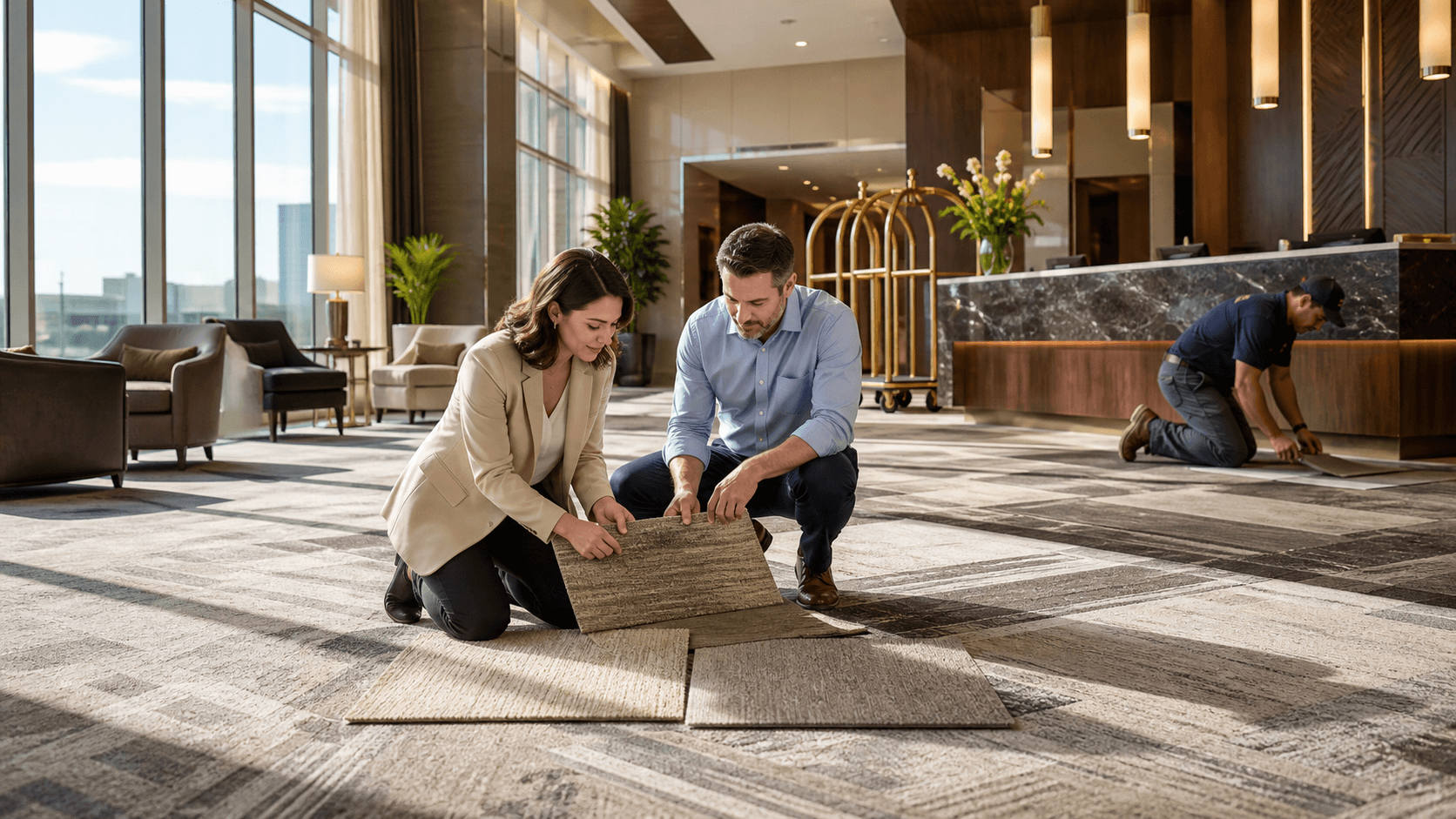
Write Specs That Do Not Get VE'd Into Failure
Good commercial flooring specifications should protect your design long after bid day. When summer bid season hits, architects and contractors are racing to get drawings out, answers back, and numbers in. That is when value-engineering cuts start to fly, and flooring often gets pushed quietly to cheaper, weaker options.
The problem is not that people are careless. Many specs look strong at first glance, but they leave just enough wiggle room for low-cost products to slide in as "equal." On site, those products may scratch faster, dent under carts, fail in wet entries, or cause warranty arguments months after turnover.
When you tighten up performance language, basis-of-design notes, and the way you handle alternates and substitutions, you protect your design intent and still allow fair competition. At United Flooring Distributors, we see how specs play out in real bids and installs every day, and we know where they usually break down.
Define Performance Before You Name Products
A spec that starts with brand names only is easy to VE. A spec that starts with performance is harder to water down. Before you call out a model, spell out what the floor has to do.
Useful performance items to define include:
- Relevant ASTM test methods and minimum values
- Wear layer or thickness requirements
- Static and rolling load limits for furniture and carts
- Slip resistance and stain resistance
- Sound control needs for multi-story spaces
- Maintenance expectations and cleaning methods
When you lead with clear performance targets, it is much easier to see if a proposed "equal" actually matches what the space needs. This matters even more in Midwestern climates, where floors see summer humidity, winter salt, and freeze-thaw cycles at entrances.
You should also explain what "equal" really means. Do not stop at color and pattern. Call out:
- Integrated underlayment if needed
- Welded or sealed seams where hygiene is important
- Factory-applied finish vs. site-applied finish
- Compatibility with moisture mitigation and patch systems
That way, a product that only "looks" similar, but has weaker construction or shorter life, does not sneak through.
It is also smart to match performance sections to space types instead of using one rule for the whole building. For example:
- High-traffic corridors and lobbies
- Wet areas like restrooms, locker rooms, and vestibules
- Healthcare spaces with rolling loads and harsh cleaners
- Classrooms, offices, and meeting rooms
- Retail and food areas with spills and scraping chairs
A floor that is fine in a classroom may fail quickly in an entry with slush, salt, and heavy mats in January. Your spec should make that difference clear.
Build VE-Resistant Basis-of-Design Language
Basis-of-design should be your anchor, not a loose suggestion. Pick a product that truly reflects the look, construction, and performance you want. Then say that other products may be considered only if they meet or exceed those same traits.
Avoid open phrases like "or equal" without conditions. Instead, close common gaps with language along the lines of:
- Products with similar appearance but lower performance are not acceptable
- Products with shorter warranties are not acceptable
- Products must meet minimum standards for dimensional stability and indentation
- Products must be compatible with specified adhesives and underlayments
Accessories are another big VE target. If you forget transitions, reducers, stair nosings, and wall base, someone else will fill in the blanks with whatever is cheap or on hand. That often leads to:
- Trip hazards at transitions
- Open seams or cracked edges at stair treads
- Mismatched colors and sheens at corridors and lobbies
- Weak edges where winter mats, snow melt, and water run-off hit the floor
Call out that accessories must be system-compatible with the main flooring and suitable for the planned mat layouts and entry conditions.
Control Alternates and Substitutions Without Killing Competition
Alternates and substitutions are not the same thing, and your spec should treat them differently. Alternates are planned options shown on the bid form, usually created by the design team or owner. Substitutions are contractor proposals to use different products than what is specified.
When the two get mixed, bid reviews drag on, owners get confused, and VE conversations turn into arguments. Make it clear that:
- Bid alternates are defined in the documents and priced as shown
- Substitutions are contractor requests to change specified materials
For substitutions, a disciplined process will save you a lot of trouble. Good practices include:
- A firm deadline for pre-bid substitution requests, usually 10 to 14 days before bids
- A requirement for complete technical data, test reports, finish samples, and color chips
- Installation instructions, including substrate prep and moisture limits
- Maintenance and cleaning guidelines
State that incomplete packages will not be reviewed. This reduces last-minute "trust us, it is equal" proposals that do not give you enough information to protect the owner.
You can also list clear review criteria, such as:
- Meeting or exceeding all stated performance and test values
- Total cost of ownership, not just first cost
- Lead times and supply reliability
- Installation complexity and crew training needs
- Long-term maintenance burden for the facility team
When these items are written into the spec, it is easier to say yes to true equals and no to weak substitutions, while staying fair to bidders.
Write Submittal Requirements That Protect Design Intent
Submittals should be more than brochures. They are your last big chance to confirm that what gets installed is what you drew.
Ask for:
- Product data sheets, including testing and warranty information
- Independent test reports where needed, not just marketing claims
- Mockups for complex layouts or high-profile areas
- Full installation system details, including primers, patching, moisture mitigation, and adhesives
This is especially helpful when projects pour slabs in summer and plan flooring work in cooler months, when moisture and temperature changes can surprise crews.
Clarify that approvals apply to the entire flooring system, not just the finish surface. That means substrate prep, underlayment, adhesive, flooring, and accessories are treated as a package. This stops VE efforts that swap just the adhesive or just the patch for something cheaper, which often shows up later as bond failure, bubbles, or cracking.
You can also ask for performance-history in similar building types and climate zones. Simple things like references for healthcare, education, or retail work in cold-weather areas help you spot products that look good in the lab but struggle when salt, snow, and rolling loads show up.
Turn Your Next Spec Into a Field-Tested Standard
A good flooring spec should improve over time. After a project has been open for 6 to 12 months, set up a quick review with the owner, maintenance staff, and flooring contractor. Ask what worked, what failed early, and what was hard to clean during winter. Use those notes to fine-tune your master language before the next busy bid season.
From there, build a repeatable commercial flooring specifications template that includes:
- Standard performance criteria by space type
- Clear basis-of-design and "equal" language
- A structured process for alternates and substitutions
- Detailed submittal and system-approval requirements
You can still adjust it for each project, but you are not starting over every time.
Regional support makes this much easier. A distributor with a warehouse in the Loves Park, Illinois area, like United Flooring Distributors, can help you pick basis-of-design products that are available, tested in local conditions, and backed by proven installation systems. When specs, products, and real-world conditions all line up, your flooring is far more likely to survive value engineering without sacrificing performance.
Get Started With Your Project Today
If you are planning a new build or renovation, we can help you navigate the details of commercial flooring specifications so your project stays on time and on budget. At United Flooring Distributors, our team works with you to match the right products to your performance, design, and compliance needs. Share your project goals and timelines, and we will recommend tailored solutions and samples. To discuss your next step with a flooring specialist, contact us today.