Win More Bids with Smarter Flooring Choices
Choosing the right flooring material for commercial bids can decide if a job helps your business or hurts it. The surface might look simple, but it affects install time, callbacks, and how your name holds up after the project is done. In Northern Illinois, where weather, older buildings, and strict codes all come into play, smart flooring choices give you a real edge.
Commercial owners and facility teams now look past the first price. They care about lifecycle cost, downtime, safety, and how a space feels for customers and staff. The right flooring system helps you answer those concerns up front. As a third-generation wholesale distributor serving Northern Illinois, we see what works in our climate and what fails, and we help contractors and retailers spec materials that perform in local buildings, not just on paper.
Know Your Space: Traffic, Moisture, and Use Patterns
Before you pick a flooring material for commercial bids, you need a clear picture of how the space is used.
Traffic and loads matter. When people, carts, and equipment move over a floor all day, weak materials wear out fast.
- Retail showrooms need good wear layers and scratch resistance
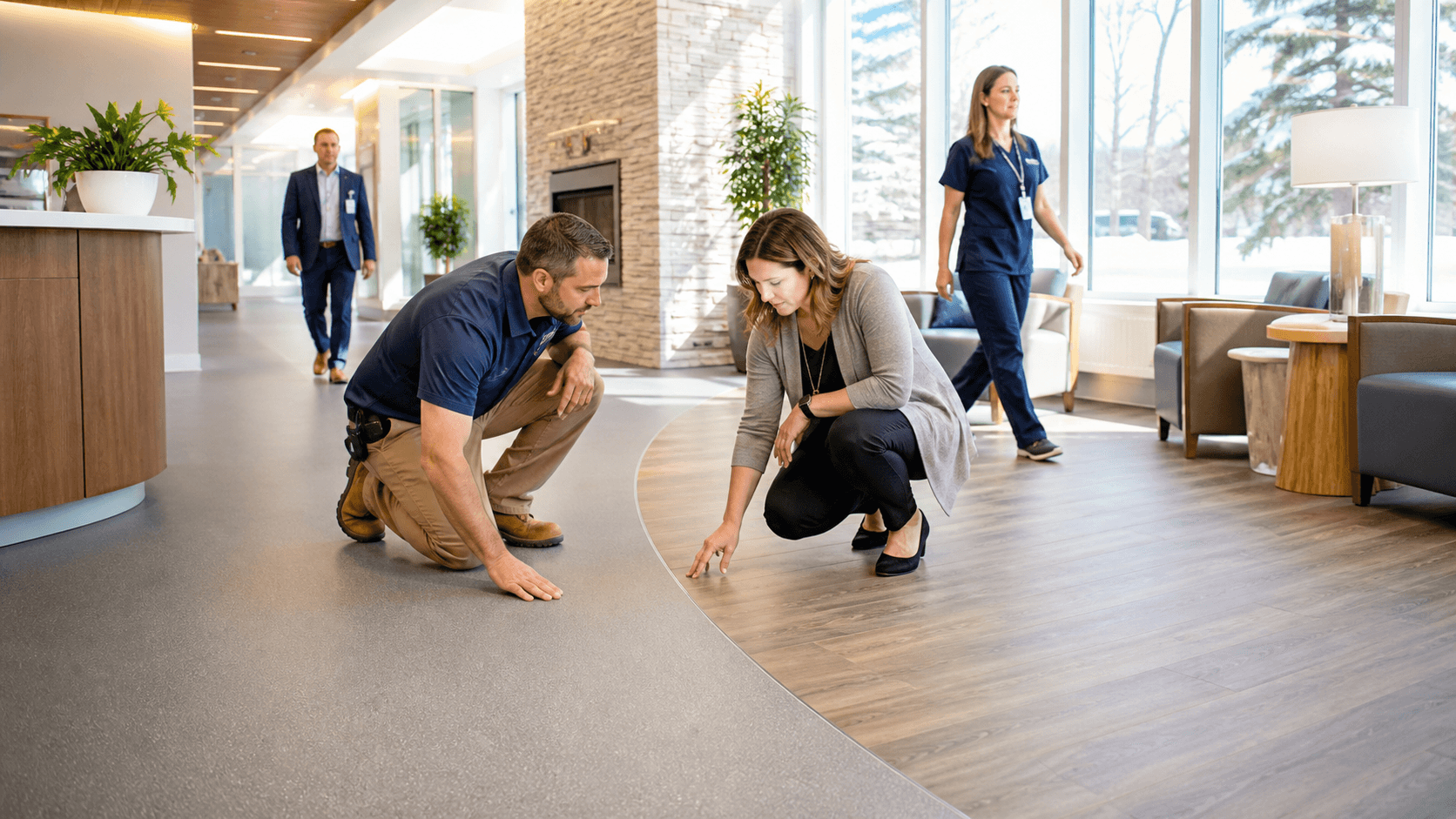
- Medical offices need smooth, cleanable surfaces that handle rolling chairs and exam tables
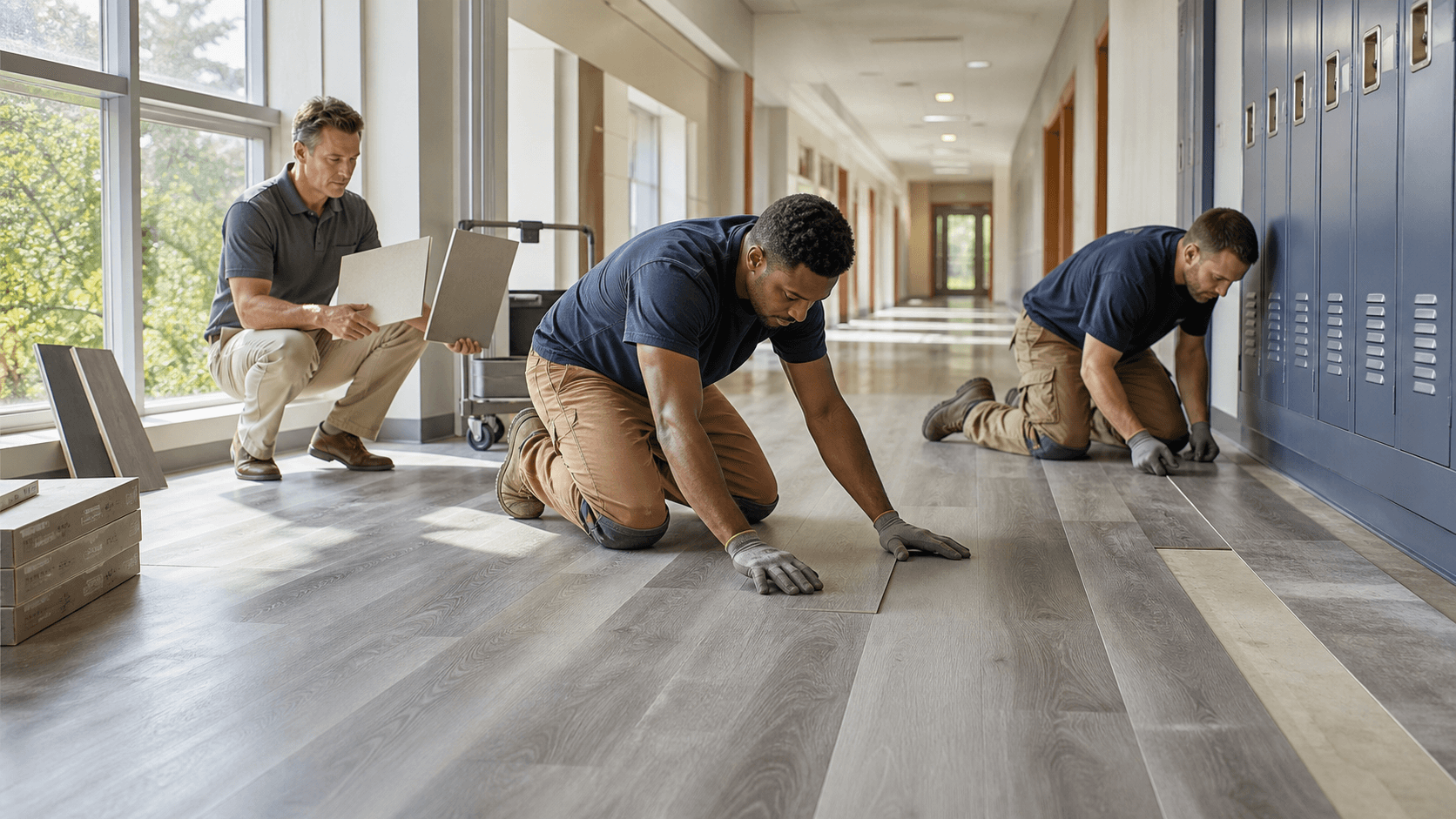
- Schools and corridors see heavy foot traffic and need impact resistance
- Light industrial zones may need higher point-load ratings and tougher finishes
Moisture and subfloor conditions are another big factor in Northern Illinois. We see:
- Below-grade slabs that hold moisture
- Older concrete with unknown curing or past damage
- Legacy adhesives that may not match newer products
Moisture testing, vapor control, and matching adhesives to both the subfloor and finished product cut down on failures like curling, bubbles, or mold concerns.
Function and branding also guide your choice. In offices, hospitality, and retail spaces, owners care about:
- Acoustics, to keep noise down in open areas
- Underfoot comfort for staff standing all day
- Colors and patterns that support brand identity
In healthcare, food service, and labs, slip resistance, cleanability, and infection control move to the top of the list. A floor that looks great but is hard to sanitize or gets slick when wet will not satisfy those clients.
Matching Materials to Northern Illinois Conditions
Our region brings wide temperature swings and tough winters. Floors at building entries deal with freeze-thaw cycles, tracked-in salt, melting snow, and constant moisture. For lobbies and vestibules, it makes sense to use:
- Durable, slip-resistant surfaces like certain porcelain tiles, rubber, or textured resilient products
- Proper walk-off mat systems to capture slush and grit
- Finishes that stand up to salt and frequent cleaning
The building stock here includes many older commercial properties in suburbs and small towns. Renovations may reveal:
- Uneven slabs or surface cracks
- Old cutback adhesive residues
- Limited time windows where spaces can be shut down
Some floating or loose-lay systems, as well as select adhesives and patching compounds, can help you work over imperfect subfloors or in phases, while keeping spaces open between stages.
Sustainability is on more bid forms now, but owners still care about performance and long-term value. Many owners ask for:
- Low-VOC flooring and adhesives
- Products with recycled content or recyclability
- Long wear life so owners aren't replacing floors too often
Your bid is stronger when you show how you balance green goals with durability, comfort, and maintenance needs across their property portfolio.
Comparing Popular Commercial Flooring Options
Resilient flooring is a common choice for many commercial projects. LVT, VCT, and sheet vinyl each have their own strengths.
- LVT offers strong wear layers, realistic visuals, and design flexibility for offices, retail, and hospitality
- VCT often has a lower upfront material cost but may need more finishing and regular polish to keep its look
- Sheet vinyl can be a smart choice where seams must be limited, such as some healthcare and wet areas
Often, LVT wins out in a commercial bid when lifecycle cost, design options, and easier maintenance are weighed with owners.
Carpet tile and broadloom both play big roles in offices, hotels, and public areas. Carpet tile can be:
- Easier to replace in small sections
- Helpful for access floors and phased installs
- Strong on acoustics and comfort
Broadloom may give a smoother, seamless look in corridors and guest areas but can be harder to patch. Fiber type, stain resistance, backing system, and how well the product handles moisture and rolling loads should guide your choice in each room.
Hard surface options like rubber, ceramic, and commercial wood-look products fill in the rest of the picture.
- Rubber works well in fitness areas, stairwells, and zones that need impact absorption and grip
- Porcelain and other commercial-grade ceramic tiles stand up in entries, restrooms, and food areas when slip-resistant textures and proper cleaning plans are used
- Engineered wood-look products and certain resilient planks give the warmth of wood with better moisture performance for lobbies and office spaces
In every case, think about slip resistance, cleaning methods, and comfort underfoot, especially where people move between wet and dry conditions.
Pricing Your Bid Beyond Cost Per Square Foot
Material price per square foot is only the start. Your final number is shaped by:
- Subfloor prep needs, like leveling, grinding, or skim coats
- Underlayments for sound, moisture, or comfort
- Special adhesives or installation systems
When you compare flooring materials for commercial bids, factor in maintenance schedules, expected replacement windows, and business downtime. A floor that installs faster, lasts longer, and needs less intense care may look better to an owner, even if the material unit price is higher.
Labor efficiency and project sequencing also change your margins. Click systems, fast-setting adhesives, and well-planned moisture control can:
- Reduce labor hours
- Shorten time that areas are closed off
- Help you handle night work and occupied spaces
In offices and retail, multi-phase projects are common. Planning material choices around realistic work windows can keep your team on track.
Risk management matters too. Matching materials, prep, and adhesives to manufacturer directions and industry standards protects your company from callbacks and disputes. In commercial work, code compliance, slip ratings, and fire performance need to be part of your spec, not an afterthought.
Seasonal Strategies and Partnering with Local Experts
Many commercial jobs in Northern Illinois bid during warm months, but the floors have to perform when winter hits. It pays to plan:
- Tough, moisture-tolerant surfaces at entries and main aisles
- Extra protection at doors where snow and salt collect
- Finishes and cleaning products that stand up to repeated winter mopping
Temperature, humidity, and acclimation affect almost every product. Resilient plank and tile, wood-look options, and some carpets all need proper storage and acclimation before install. This helps avoid gapping, cupping, or wrinkling when the HVAC cycles change from summer to winter.
Building maintenance plans belong in your bid from day one. Clear guidance on:
- Cleaning methods and approved products
- Floor finish or sealer choices
- Spot repair and replacement strategies
gives owners more confidence in your proposal and helps the floor last longer.
For contractors and retailers across Northern Illinois, working with a local wholesale distributor that understands regional buildings, climate, and codes can make each proposal stronger. At United Flooring Distributors, we support product selection, material comparisons, and system recommendations tailored to real-world commercial use in our area, so your bids are clear, competitive, and built to perform.
Get Started With Your Project Today
Choose the right foundation for your space by exploring our full range of flooring material for commercial bids tailored to different performance and budget requirements. At United Flooring Distributors, we work with you to match the right products to your project goals, timelines, and specifications. If you are ready to talk through options or request specific information, simply contact us and our team will respond promptly.