Stop Costly Callbacks From Glue-Down Flooring Failures
Glue-down flooring in offices, retail spaces, and healthcare buildings looks simple on paper. Spread adhesive, lay the material, roll it, and move on to the next job. But when small steps get skipped, those "simple" projects can turn into noisy callbacks, hard conversations, and lost time for your crews.
In Northern Illinois, commercial floors deal with snow at the door, salt, spring rain, humid summers, and big temperature changes. All of that tests every bond in a glue-down system. As a local wholesale distributor, we see where projects go wrong and how easy it is to prevent many failures with better planning, product choices, and training. In this article, we will walk through the most common commercial glue-down flooring mistakes in Northern Illinois, how they show up on real jobs, and what to do differently before the next busy construction rush hits.
Misjudging Subfloor Moisture and Temperature
Moisture is one of the biggest enemies of commercial glue-down flooring in Northern Illinois, especially over concrete slabs. Wet springs, humid summers, and slow-drying interiors make guessing a bad idea. When moisture is higher than the flooring system can handle, failures often show up as:
- Adhesive softening or re-emulsifying
- Bubbles or blisters under LVT, VCT, or sheet goods
- Dark joints, mold smells, or staining at seams
A lot of problems start with moisture testing shortcuts. Installers may skip RH or calcium chloride tests and just "go by feel," or test only one or two areas instead of checking conditions across the entire slab. Another common issue is ignoring the specific moisture limits listed by the flooring and adhesive manufacturers. Even when testing is done correctly at first, some crews test once, then add patch or curing compounds and never retest, only to discover later that the slab conditions changed or the system no longer meets manufacturer limits.
Temperature is just as important as moisture. Installing when a building is not at normal use conditions can cause adhesive to cure too fast or too slow. If the HVAC is off, doors are propped open, or temperatures swing between day and night, you can run into:
- Poor adhesive transfer and weak bond
- Adhesive skinning over before the flooring hits it
- Extended cure times that push back furniture moves and opening dates
Prevention tips:
- Follow ASTM and manufacturer testing methods and keep written records
- Test several spots, including problem areas like entries and exterior walls
- Coordinate with the owner or GC so HVAC runs at stable, in-service conditions for at least 48 to 72 hours before and after install
- Acclimate flooring and adhesive in the space, not in a truck or cold warehouse
Skimping on Surface Prep and Leveling Work
Rushing surface prep is one of the fastest ways to guarantee callbacks. Glue-down floors are only as good as the surface underneath them. Dust, old adhesive, paint, and uneven spots all show up later as problems, especially in high-traffic commercial environments where small imperfections quickly turn into visible failures.
We often see these prep mistakes:
- Not mechanically removing old cutback adhesive or loose coatings
- Ignoring minor cracks or joints that later telegraph through LVT or rubber
- Skipping primer when the patch, leveler, or adhesive requires it
- Using a light-duty patch instead of a commercial-grade product in heavy traffic areas
Older buildings in Northern Illinois tend to have patchwork slabs and mixed substrates from room to room. One corridor might be newer concrete, while the next space might be old patch and residue from several past floors. If the prep plan does not match each area, you can end up with different bond strength across the same project, which raises the risk of isolated failures that are hard to explain to owners.
Better surface prep starts before you quote the job:
- Walk the entire space and note every substrate change
- Check how flat the floor is and where telegraphing is likely
- Choose commercial-grade patching and leveling materials that match the traffic and flooring type
- Follow cure times and do not rush to adhesive just because a schedule is tight
- Ask your distributor for help on which patch, primer, and adhesive systems work together
Using the Wrong Adhesive or the Wrong Spread Rate
Not all adhesives act the same, and not all are meant for every space. There are pressure-sensitive, hard-set, and multi-function adhesives, each with different open times, working times, and moisture limits. In busy commercial work, that matters a lot, because the wrong adhesive choice (or a "close enough" substitution) can create bond problems even when the slab and prep are handled correctly.
Common adhesive errors include:
- Picking an adhesive only because it is cheaper or already in the van
- Mixing brands between the flooring and adhesive, then assuming they are compatible
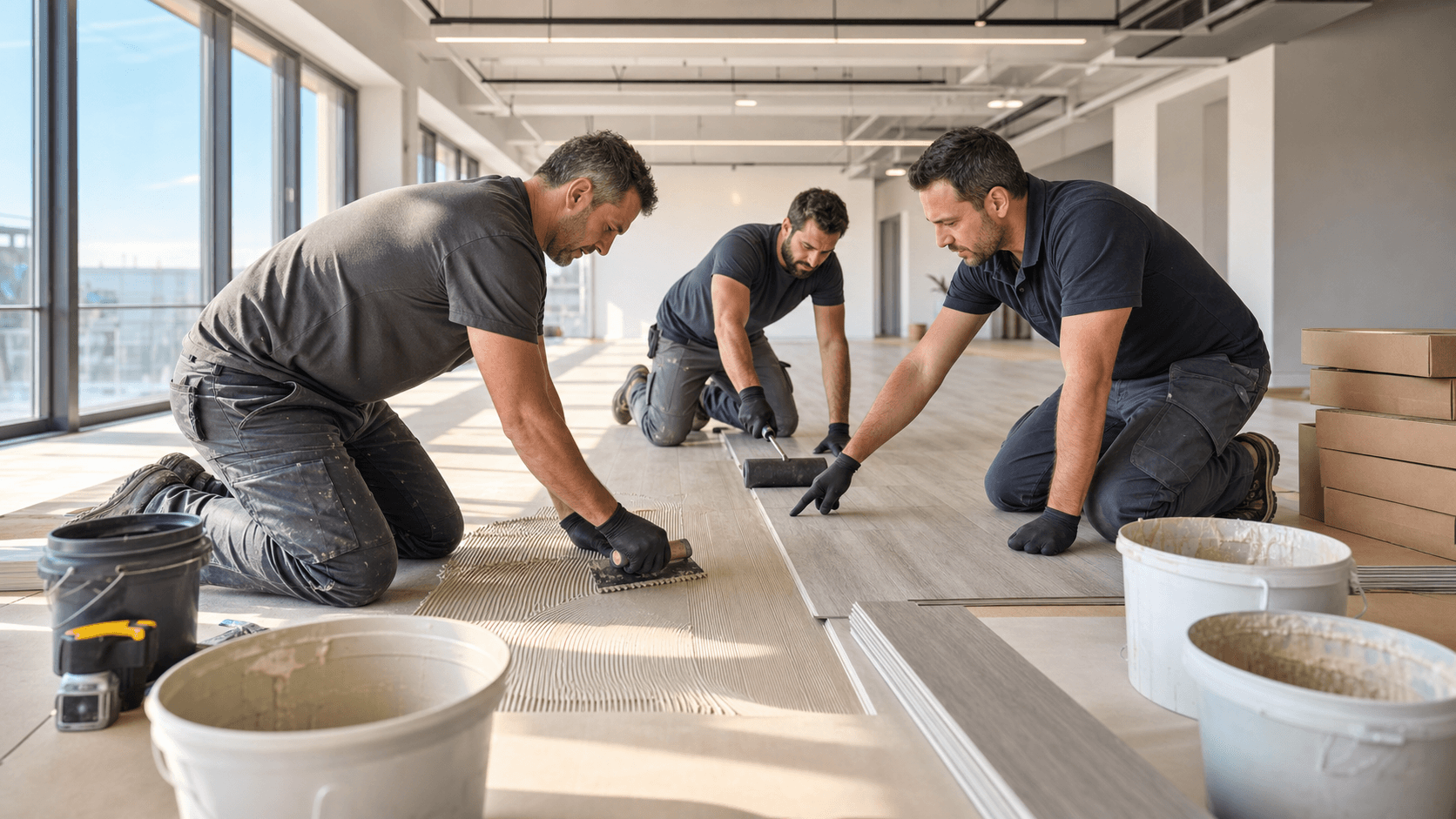
- Spreading too much or too little adhesive compared to manufacturer instructions
- Ignoring required trowel notch sizes or using worn-out trowels that cut spread rate in half
Seasonal temperature shifts in Northern Illinois also affect how adhesives behave. On a hot summer day, adhesive can flash off fast if the building is not cooled. In a cold, unconditioned space, it can stay wet much longer than the label suggests. Either way, bond quality suffers because installers may be working outside the proper open time or setting material into adhesive that is no longer in the right condition.
Best practices to avoid problems:
- Match the adhesive to the exact flooring product and its use, such as healthcare, education, or retail
- Follow recommended spread rates and open times, adjusting only within the manufacturer's guidelines
- Use the correct trowel notch, replace trowels often, and check spread visually
- Train crew leaders to test for transfer by lifting tiles or planks during install
Rushing Layout, Rolling, and Traffic Protection
Even when prep and adhesive are right, rushed finishing steps can still ruin a job. Wide-open commercial spaces make layout, rolling, and protection mistakes very obvious, and small errors tend to repeat across large square footage.
Layout issues we see include:
- Not snapping square control lines before starting
- Skipping dry layouts in key focal areas like lobbies and long corridors
- Ignoring sightlines, so patterns look crooked against walls, glass, or casework
Proper rolling is just as important as proper spread. When installers skip or rush rolling, you may see:
- Hollow spots, especially along seams or edges
- Corners lifting under chairs and carts
- Uneven transfer that shortens the life of the floor
Then there is traffic. Many Northern Illinois businesses want to reopen as fast as possible, but if heavy furniture, carts, or foot traffic hit the floor before the adhesive has set, movement and damage can happen immediately. That early abuse often leads to:
- Shifting seams or planks that move out of place
- Compression marks from wheels and legs
- Early wear patterns right at entries and nurse stations
To avoid these headaches:
- Build realistic schedules that include time for layout and rolling, not only spread and set
- Use the roller weight specified for the flooring product and follow recommended rolling patterns and timing
- Protect new floors with the right coverings, not materials that can trap moisture or stick to the surface
- Clearly explain traffic limits and cure times to the owner and put those expectations in the proposal
Partnering Local to Avoid Expensive Flooring Do-Overs
Most failures in commercial glue-down flooring in Northern Illinois come back to a few simple things: poor moisture and temperature control, weak surface prep, the wrong adhesive, and rushed timelines. The good news is that all of these can be planned for and corrected before crews ever open a pail of adhesive.
As a third-generation, family-owned distributor based in Loves Park, we work every day with retailers and contractors who handle tough commercial spaces across the region. We see which products stand up to local weather, traffic, and maintenance habits, and we help match flooring, adhesives, prep materials, and training so that systems work together instead of fighting each other.
When contractors and retailers bring us into the conversation early, we can help review slab conditions, talk through moisture and prep needs, and suggest job-specific combinations that give crews a better chance at a clean, callback-free install. With the right local partner, glue-down floors do not have to be a gamble. They can be a steady, reliable part of your commercial business, project after project.
Get Started With Your Project Today
If you are planning a new build or renovation, we can help you choose the right commercial glue-down flooring in Northern Illinois to meet your performance and budget needs. At United Flooring Distributors, our team works with you to match products to your timeline, traffic levels, and design goals. Reach out any time to discuss specs, request product guidance, or explore options for your next commercial space, and feel free to contact us to get started.