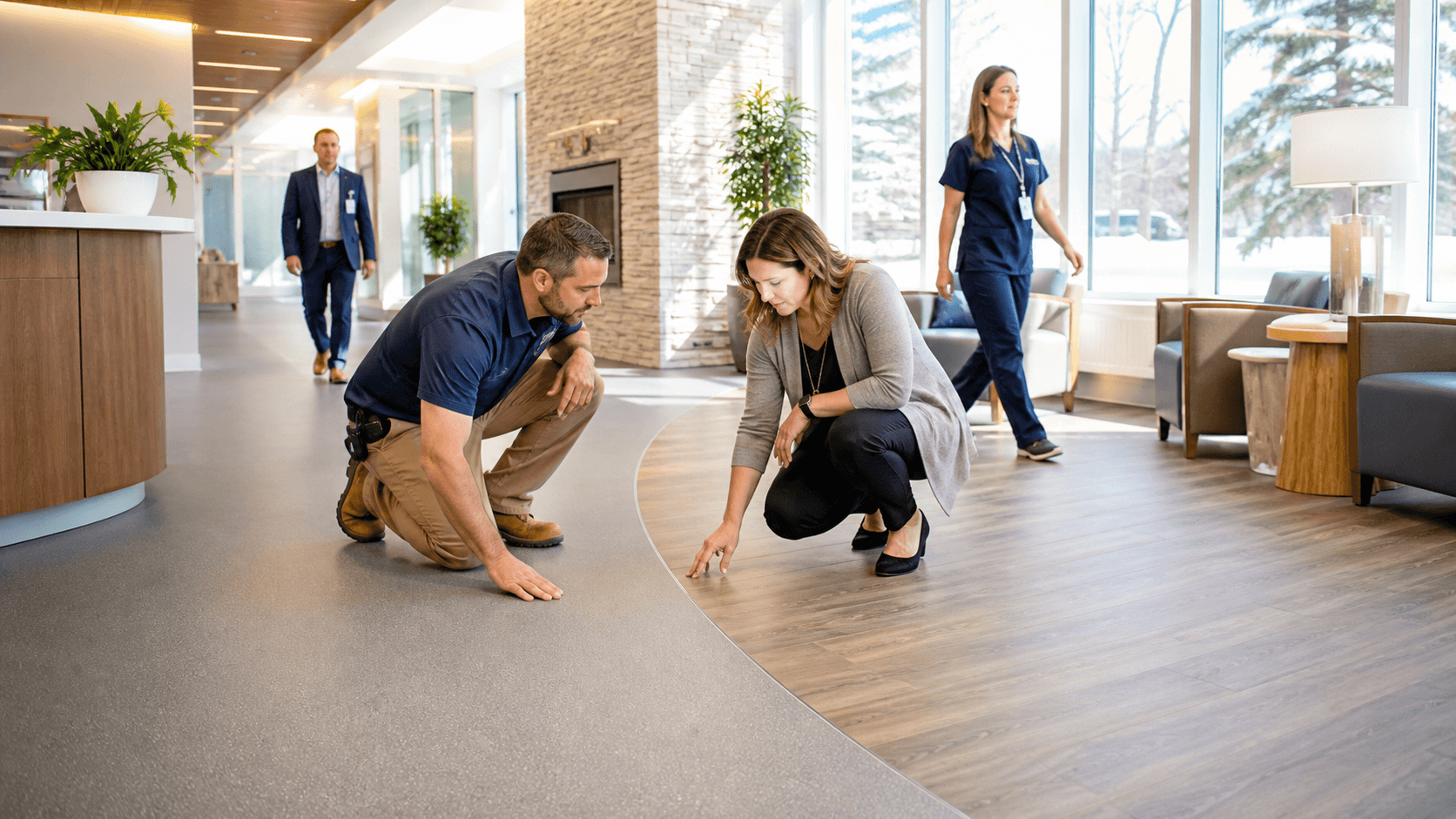
Rethinking Architectural Flooring Choices in Chicago
Architects in Chicago carry a lot of weight on every project. You are balancing tight budgets, harsh freeze-and-thaw cycles, strict acoustic expectations, and clients who want spaces that feel modern, comfortable, and durable. Flooring is right in the middle of all of that.
Many design teams fall back on familiar resilient lines because they are known, safe, and easy to specify. That habit can hide strong options like carpet tile, porcelain and ceramic, terrazzo, and polished concrete that might fit certain zones much better when you look past first cost and focus on how they actually perform over time.
In this article, we walk through how these non-Flexco materials stack up when you look at lifecycle cost, acoustics, slip resistance, and maintenance in Chicago's climate. As a third-generation wholesale flooring supplier serving Northern Illinois and the Chicago area, we see the real-world results after years of snow, salt, and traffic, not just how products look on day one.
Setting the Criteria for Flooring That Works in Chicago
Good flooring decisions start long before finish schedules. In our area, winter snow, road salt, and temperature swings should shape your criteria right from schematic design. If those factors are not clear, it is easy to choose a product that looks good in renderings but creates headaches after the first winter.
When you define your criteria, it helps to write them down in plain language:
- Lifecycle cost across the expected service life
- Acoustic performance targets for each space type
- Slip resistance in wet and contaminated conditions
- Realistic maintenance tasks for the actual staff and equipment on site
Lifecycle cost should cover more than material and labor. It should include:
- Substrate prep and underlayment systems
- Service life based on use type and traffic
- How easy it is to repair or replace localized damage
- Downtime for deep cleaning, refinishing, or replacement
On the acoustic side, Chicago projects often chase LEED or WELL goals and have to meet local expectations for comfort and privacy. That can mean:
- Impact sound control in multifamily and senior living corridors
- Speech privacy in offices, clinics, and education spaces
- Lower reverberation in open offices and classrooms
Then there are Chicago-specific realities: dirty entry zones loaded with ice melt, humidity swings that affect slabs and toppings, and strong safety expectations in healthcare, education, and multi-unit housing. Your flooring has to stand up to all of that without creating a maintenance plan that no one on site can sustain.
Carpet Tile Strategies for Quieter, Flexible Interiors
Carpet tile is often underused in architectural flooring in Chicago, especially where comfort and noise control matter most. For offices, schools, senior living, and multifamily corridors, it can quietly solve several problems at once.
From a lifecycle cost point of view, carpet tile offers:
- Competitive installed cost compared to broadloom in many layouts
- The ability to replace only damaged or stained tiles instead of full rooms
- Backings designed for dimensional stability and long wear
- Extended useful life when paired with a basic maintenance plan
That selective replacement feature is especially helpful in spaces with coffee, food, or rolling chairs. You do not have to shut down entire floors just to fix small areas.
Acoustically, carpet tile is a strong tool. Its soft surface helps:
- Cut down impact noise from footsteps in corridors and open offices
- Soften airborne noise and reduce harsh echoes
- Improve speech intelligibility in classrooms and conference rooms
Those gains sometimes allow you to back off on other acoustic treatments, as long as you coordinate with ceilings and wall finishes.
In winter, slip resistance and maintenance become big questions. Carpet tile can help capture snow and salt that would otherwise get tracked deeper into the building. To keep it looking good in Chicago conditions, we usually see:
- A defined walk-off zone at entries to knock down the worst of the contamination
- Regular vacuuming with proper equipment
- Periodic hot water extraction or low-moisture cleaning
Darker, patterned styles and solution-dyed fibers hide tracked-in grime and hold color over time, even with frequent cleaning.
Hard Tile Versus Terrazzo in High-Traffic Public Areas
Porcelain and ceramic tile, and terrazzo both show up in public spaces, but they are often misunderstood in terms of long-term performance. On paper, they are both hard, durable surfaces. In practice, their strengths are different.
On lifecycle cost:
- Porcelain and ceramic often come with a lower first cost
- Their service life depends heavily on grout selection, layout, and substrate prep
- Grout joints are common failure and maintenance points in wet and dirty zones
Terrazzo, on the other hand:
- Has a higher upfront investment
- Offers a very long service life in heavy-traffic and heavy-load environments
- Handles rolling loads and constant foot traffic with fewer joints and transitions
For major lobbies, transit hubs, and campus buildings, that longer horizon can offset the higher initial spend, especially where future shutdowns would be painful.
Acoustically, both tile and terrazzo are reflective. They can create bright, lively spaces that also carry a lot of noise. When that is a concern, design teams often pair these floors with:
- Acoustic ceilings or clouds
- Wall panels or baffles in key reflection paths
- Area rugs in seating zones
As long as the project accepts a livelier sound in circulation spaces, this tradeoff can work well for monumental entries.
Slip resistance and maintenance are where Chicago's winters really show up. Entrances loaded with snow and salt can become slick if finishes are too smooth. Good practice includes:
- Selecting textures and COF ratings that support wet traction
- Using smaller tile formats or textured finishes close to doors
- Planning maintenance for regular mopping and auto-scrubbing
- Protecting and cleaning grout carefully so it does not become a weak link
For terrazzo, the focus is on correct sealing and polish level, plus realistic schedules for re-polishing and salt control.
Polished Concrete as a Modern, High-Visibility Finish
Many Chicago buildings already have a structural slab that could be used as finished flooring. Polished concrete turns that existing surface into a design feature, especially in retail, adaptive reuse, industrial-style offices, and amenity spaces.
In lifecycle cost terms, polished concrete often looks appealing because you are working with what you already have. Still, it requires:
- Evaluation of the slab for flatness, cracking, and previous treatments
- Patching, joint treatment, and potential leveling
- Densifying and guard products to build performance into the surface
- Periodic re-polishing and resealing over the life of the space
When you compare it over 15 to 20 years to other systems, the absence of a separate finish layer can balance out the service work, especially where heavy traffic is constant.
Acoustically, polished concrete is highly reflective. Left alone, it can create harsh, noisy spaces. To keep the exposed look and gain control, teams often combine it with:
- Absorptive ceiling systems
- Soft seating and area rugs in key gathering zones
- Acoustic wall elements that break up reflections
This way, you still get that clean, industrial aesthetic while keeping sound levels comfortable.
Slip resistance and maintenance are closely tied to surface profile and chemistry. For Chicago projects, we look at:
- The level of polish versus the need for traction in wet or food service zones
- Densifiers and guard products that support both stain resistance and grip
- Simple daily care like dust mopping and auto-scrubbing with the right pads
- A planned schedule for touch-up polishing once winter grime has taken a toll
With a clear plan, polished concrete can stay safe and good looking through multiple freeze and thaw seasons.
Turning Specs Into Long-Term Performance for Chicago Projects
At the end of the day, better architectural flooring in Chicago comes from early, honest evaluation. Taking the time to compare carpet tile, porcelain and ceramic tile, terrazzo, and polished concrete against lifecycle cost, acoustics, slip resistance, and maintenance will often shift where you use each product.
Updating standard specifications so they include these checkpoints helps catch issues before they reach bid sets. Local performance data, in-place mockups, and early consultation with manufacturers and wholesalers can give you real feedback on how systems hold up under Chicago's snow, salt, and traffic.
As a third-generation, family-owned wholesale flooring supplier serving Northern Illinois and the Chicago area, we see what actually lasts in lobbies, corridors, classrooms, and healthcare spaces. When architects, designers, and contractors bring us in early, we can help align design intent with materials, details, and maintenance plans that support long-term performance in our climate.
Get Started With Your Project Today
Explore our curated selection of architectural flooring in Chicago to find the right solution for your next commercial or residential project. At United Flooring Distributors, we work closely with designers, architects, and contractors to align performance, aesthetics, and budget. If you are ready to discuss specs, samples, or timelines, contact us so we can help move your project forward with confidence.