Smarter School Floors for Safer, Stronger Learning
Flooring in schools used to be a simple box to check. Pick something tough, put it down, hope it lasts. Today, flooring plays a bigger role in how students learn, move, and feel in a building. The right surface can support safety, calm noise, and help maintenance staff keep up, all while staying within district budgets.
Architects, facility planners, and contractors across Northern Illinois are paying more attention to how each flooring choice affects acoustics, indoor air quality, and long-term care. A floor that cleans quickly, holds up to busy hallways, and supports healthy air can save districts a lot of trouble years later. That means smarter architectural flooring in Northern Illinois schools is now part of every serious building conversation.
As a third-generation, family-owned distributor based in Loves Park, we work every day with local school projects. We focus on practical, commercial-grade solutions that fit how schools really operate, not just how drawings look on paper.
How Northern Illinois Climate Shapes School Flooring Needs
Northern Illinois weather puts school flooring to the test. Freeze-thaw cycles break down exterior surfaces, and everything from salt and sand to snow and mud gets tracked right inside. Entryways, corridors, and stairwells take the brunt of it, and the floor has to manage all that grit without becoming a slip risk or wearing out too quickly.
Some of the toughest climate challenges include:
- Salt and de-icers scratching and staining surfaces
- Melted snow soaking walk-off areas and seeping into seams
- Mud and grit grinding into finishes in long corridors
- Temperature swings stressing adhesives and subfloors
Moisture and humidity shifts also matter. When summer humidity hits, subfloors can move and adhesives can react. If moisture is not checked and controlled, you can see curled edges, bubbling, or adhesive breakdown. Moisture mitigation and the right installation systems are just as important as the specified surface.
School schedules add another layer. Projects often must fit into short summer renovation windows, with strict completion dates before staff returns. Architectural flooring in Northern Illinois needs to match not only the climate, but also the realistic installation timelines and dry times that districts can support.
Rethinking High-Traffic Zones: Corridors, Entries, and Commons
High-traffic zones are where flooring choices show their strengths and weaknesses fastest. Entries, corridors, and commons see rolling loads, wet shoes, food spills, and big events. In winter, slip resistance becomes a daily concern as snow and slush come through the doors.
Key performance priorities in these zones usually include:
- Slip resistance when floors are wet or dirty
- Resistance to scuffs, dents, and rolling carts
- Fast cleanability before and after events
- Good appearance even as they age
Different products fit different needs:
- LVT (luxury vinyl tile) works well for corridors and commons where districts want design flexibility and strong wear layers.
- Rubber flooring can help in stairwells and entries, where slip resistance and impact resistance are key.
- Sheet vinyl can be a smart option where seams need to be limited and cleanability is a top concern.
- Carpet tile is often used in some commons or breakout spaces where noise control and comfort are more important.
- Entrance matting systems, both recessed and surface-mounted, are important at every main entry to catch dirt and moisture before it spreads.
Good design can also extend floor life and improve safety. Keeping transitions as flush and as simple as possible helps cut trip hazards. Using color zoning can guide traffic, mark queuing areas, or set off wet zones near entries. Placing longer entrance matting runs outside and inside the doors reduces wear patterns further down the corridors.
Creating Healthier, Quieter Classrooms and Libraries
Classrooms and libraries are where sound and comfort really matter. Hard, echoing floors can make it tough for students to hear teachers, especially in rooms with a lot of movement and group work. Noise reduction helps students focus and helps teachers avoid straining their voices.
Popular choices to support quieter learning include:
- Carpet tile in classrooms and media centers for sound absorption and comfort underfoot
- Rubber flooring in multipurpose learning areas that need some give and noise control
- Acoustic vinyl systems that pair a resilient surface with sound-reducing underlayments
Indoor air quality should always be part of the discussion. Architectural flooring in Northern Illinois schools needs:
- Low-VOC flooring and adhesives to support healthier indoor air
- Surfaces that are easy to disinfect without harsh routines that damage finishes
- Maintenance plans that reduce dust and allergen buildup while keeping floors safe and presentable
When materials and maintenance work together, custodial staff can clean floors efficiently and consistently, which helps protect both the floor and the people using it.
Designing for Longevity: Life-Cycle Costs and Maintenance
Initial material price is only one piece of the puzzle. For districts, the bigger picture is how long the floor will last before replacement, how hard it is to maintain, and how often it needs deep restorative work. Sometimes a slightly higher-grade product with a better wear surface or backing will pay off over time with fewer repairs and longer use.
To support better life-cycle value, it helps to:
- Match the product to the actual traffic level, not just the room label
- Select adhesives and installation materials that suit the subfloor conditions
- Invest in proper subfloor prep to avoid failures that can shorten floor life
- Align cleaning equipment and chemicals with what the product can handle
Standardizing flooring systems across multiple buildings can simplify everything for a district. When a group of schools uses a common set of finishes, it becomes easier to:
- Stock spare tiles or planks for quick repairs
- Train maintenance staff on one set of care methods
- Write tighter and clearer bid specs for future work
Good planning at the design stage protects the investment and reduces surprises after students and staff are in the building.
Partnering Early with a Local Flooring Distributor
Many project headaches start when product choices and supply realities do not match. Working with a distributor early in schematic design can help confirm that specified products, colors, and installation systems are realistic, available, and suited to local school needs.
Having a regional warehouse in Loves Park gives us a close view of how architectural flooring in Northern Illinois actually performs day after day. We see what holds up to local salt use, how different systems react in older buildings, and which products districts come back to when they expand or renovate.
For architects and contractors, a local wholesale distributor can support:
- Timely product samples and mockups for review
- Current technical data for flooring and installation materials
- Guidance on compatible adhesives, underlayments, and moisture systems
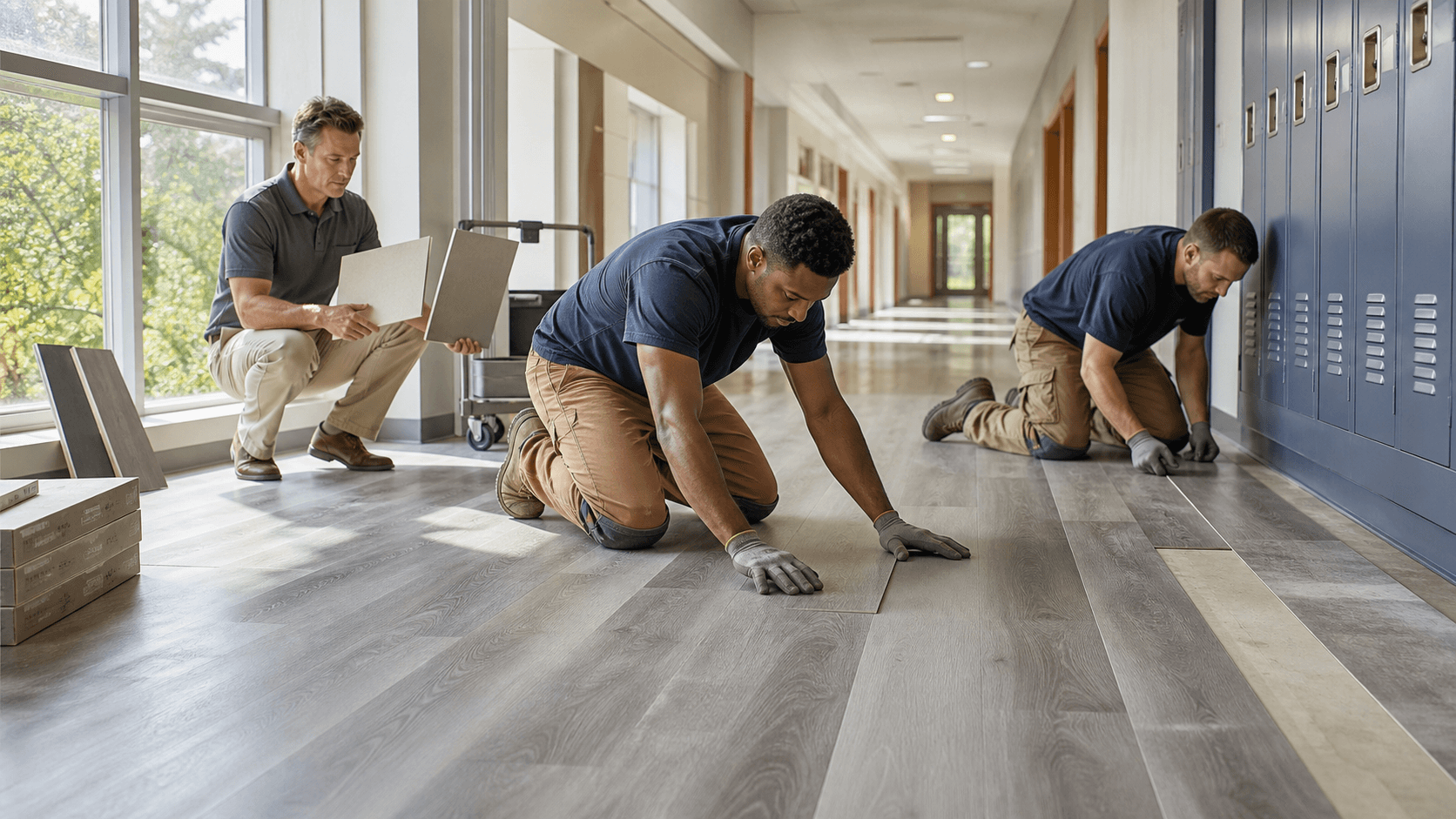
- Coordination with preferred installers to help keep specs and installation aligned
This kind of early, practical input often prevents last-minute substitutions, delays, and change orders that can disrupt tight school schedules.
Your Next School Project: Steps to Smarter Flooring Specs
When planning the next school or renovation, it helps to follow a clear checklist. Before locking in flooring specs, districts and design teams can:
- Map traffic and moisture zones, from main entries to quiet rooms
- Set performance priorities for each area, such as slip resistance, acoustics, or cleanability
- Confirm maintenance capacity, including staff, equipment, and cleaning plans
- Match product choices and installation systems to realistic construction windows
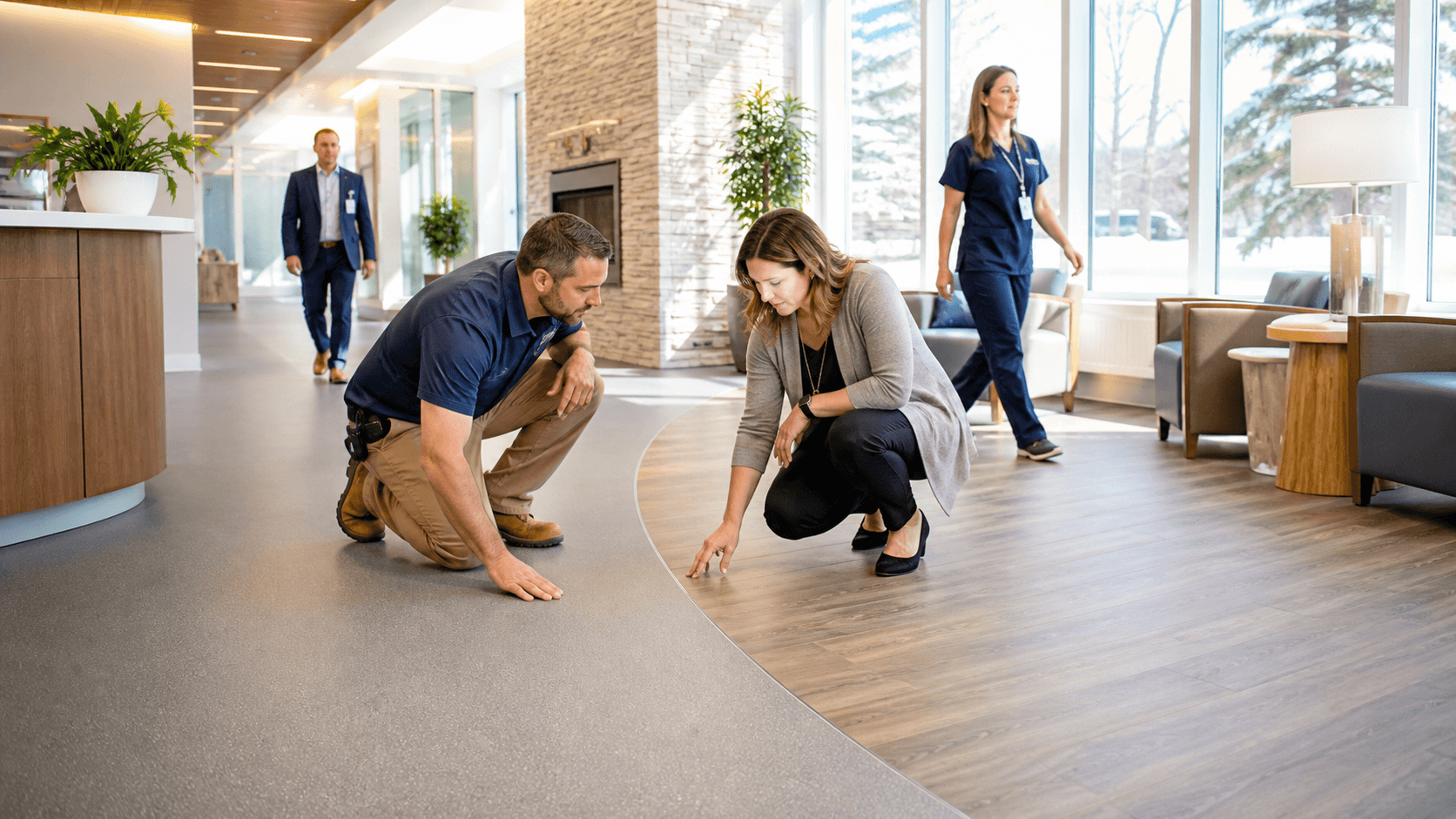
It is also smart to review existing buildings. Walking older schools with facility staff often reveals which floors have held up and which have been ongoing trouble spots. That feedback is a useful guide when refining new flooring standards.
By taking the time to think through climate, traffic, acoustics, air quality, and life-cycle care, districts can make better decisions about architectural flooring in Northern Illinois. United Flooring Distributors is ready to help with project-specific recommendations, sample boards, and practical options that support safer, stronger learning environments across the region.
Get Started With Your Project Today
Explore our curated selection of architectural flooring in Northern Illinois to find solutions that align with your design vision, performance needs, and budget. At United Flooring Distributors, we work closely with you to recommend products that meet project timelines and technical specifications. If you are ready to move forward or have detailed questions about your next project, contact us so we can help you plan the right flooring package.